Our Curriculum at Thames
Intent
At Thames Primary Academy, we have created a wide and varied learning experience for our pupils to enjoy. We have built a curriculum which meets the requirements of the National Curriculum and is underpinned by some key principles of educational research:
- Learning is most effective with spaced repetition.
- Interleaving helps pupils to discriminate between topics and aids long-term retention.
- Retrieval of previously learned content is frequent and regular, which increases both storage and retrieval strength.
- Learning is invisible in the short-term and sustained mastery takes time.
Teaching and learning follows a carefully-chosen, deliberately-sequenced and well-linked journey of core knowledge from our nursery up to Year 6. Key knowledge and end points that pupils are working towards are clearly identified. Key vocabulary is taught explicitly and the subject matter is brought to life where possible with a visit or expert visitor to school. The way we teach enables children to recall and talk about their learning and to link this understanding to new knowledge so they know more and remember more, thus strengthening their schema.
Implementation
We use a variety of approaches to support learning including: Read,Write,Inc for phonics and Maths No Problem. Speaking and listening and reading are threaded throughout the curriculum so that all children develop a love of reading and have access to a rich vocabulary to enable them to access the wider curriculum. We strive to develop each and every child’s communication skills, both written and verbal, to ensure they are equipped to express themselves fully throughout their lives.
Our curriculum is everything our children learn here, from the moment they walk through the gates. We value the spiritual and moral development of each person, as well as their intellectual and physical growth. All children make progress from their starting points; they develop a love for learning and they grow in confidence from recognition of their achievements. We provide our children with rich opportunities– such as musical performances and sports tournaments, as well as classroom learning– so they can enjoy being active members in our local and global communities. Using our towns’ history and local cultural opportunities, our children learn about their place in, and ways to shape, their community. Cultural capital opportunities have been identified across the curriculum to give our children the powerful background knowledge required to be informed and thoughtful members of our community who understand and believe in British values.
At Thames Primary Academy, we hope to widen horizons and prepare our children to be active citizens who can take their part in the world with knowledge, with respect, with confidence and with creativity.
Assessment
Effective assessment provides information to help teachers continually improve teaching and learning.
We collect information about children’s progress during lessons, after a series of lessons, at the end of a topic and at the end of an academic year.
Assessment for Learning- also known as Formative Assessment
- This takes place during teaching and learning.
- Evidence is actually used to adapt the teaching work to meet the needs of the learners.
- At Thames we give our children regular feedback on their learning so that they understand what it is that they need to do better and time to make improvements in their purple pen.
Assessment of Learning- also known as Summative Assessment
- Carried out periodically (e.g. end of a unit, term or year)
- To judge how well a pupil is performing
- Usually reported in terms of grades, marks, stage or level
- Allows the Academy to track progress over time of individuals, groups and classes.
We give parents regular reports on their child’s progress so that teachers, children and parents are all working together to raise attainment and achievement for all of our children.
Parents will receive a formal report at the end of the academic year and will be invited in to meet with class teachers once per term to review their child’s progress.
You can learn more about statutory assessment in Early Years, KS1 and KS2 below
Primary School Progress Measures
Early Years Foundation Stage Assessment
Year 1 Phonics Screening Checks
We are proud to be a
GOOGLE REFERENCE SCHOOL
“Your school is doing exemplary things with Google tools and we’re excited for you to join this select group of Reference Schools.”

Thames has been awarded this in recognition of our effective use of G Suite for Education tools throughout the school to support the quality of teaching and learning.
Our goal is for all students to have access to technology within their lessons, and for it to be used to allow students to become confident and responsible users of modern technology, promoting communication, independence, resilience, collaboration and progress.
The majority of our teaching and support staff are Level 1 Google Certified, others have Level 2 and we benefit from having a Google Certified Trainer within our Trust.
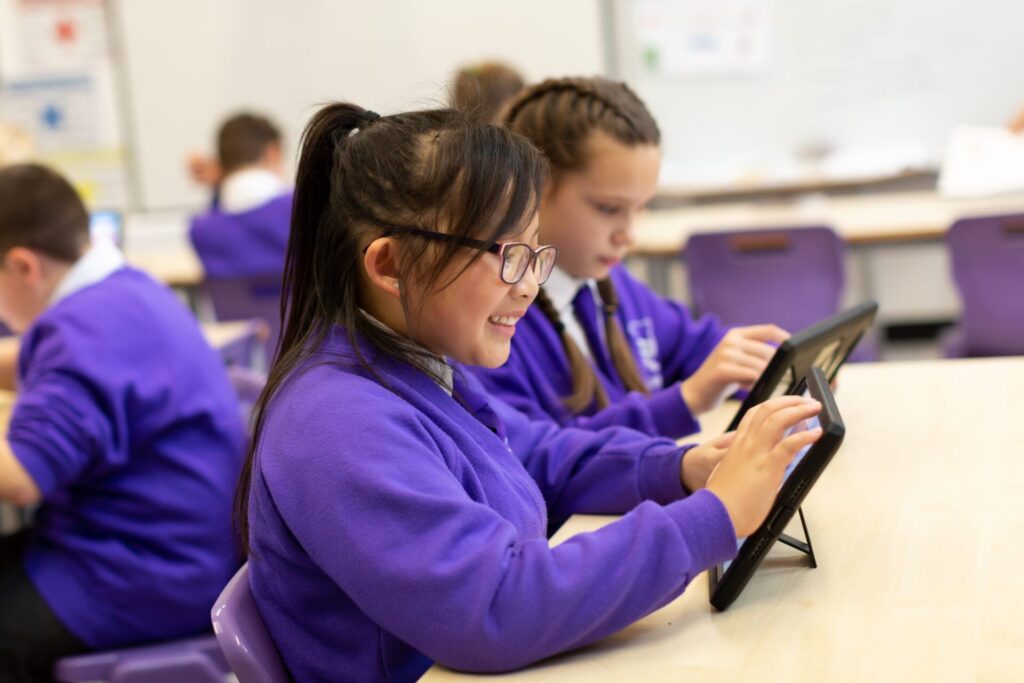
All pupils in Y3-6 have access to their own chromebook to support their learning and pupils in Year 6 take their device home with them also. Pupils in EYFS, Y1 and 2 have a class set of 30 touchscreen chromebooks which are shared across each year group.
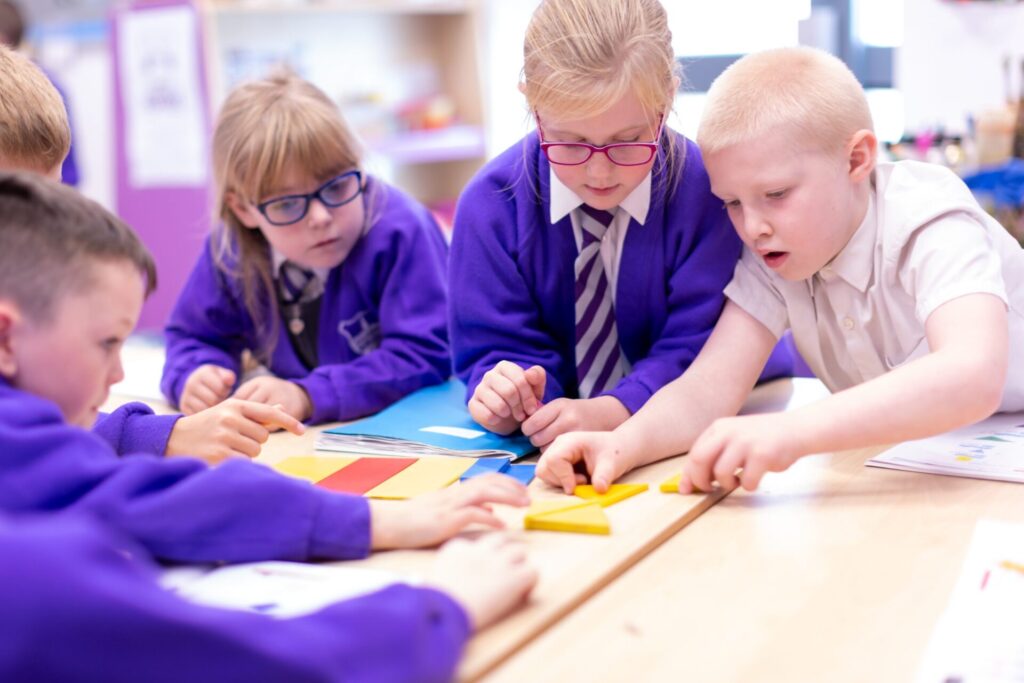
Pupils work through a digital skills passport which identifies the skills pupils need in order to use technology effectively. These skills are taught systematically through the computing curriculum and are embedded in lessons throughout the whole curriculum.
Technology is used to supplement and enhance teaching and learning in the classroom and beyond. Google Classroom is used as a platform for presenting lesson content and resources to support learning and the student dashboard offers pupils easy access to additional resources such as software applications and wellbeing and resilience resources. Pupils all have Google accounts, allowing them to store their work in the ‘Cloud’ as opposed to on a network. This allows our pupils to login to a variety of devices, anywhere on the school site or at home and access teaching and learning resources and lesson content.
Lessons are planned to encourage opportunities for pupils to communicate their ideas, collaborate, research, present information and innovate. Teachers offer pupils feedback on their learning via Google Classroom and through voice notes This has had a positive impact on pupil motivation and independence and supports access for pupils with identified barriers to their learning.
The use of technology and Google tools in lessons supports teachers in modelling new learning, offering feedback and in providing adaptive strategies for pupils with SEND/learning barriers. Struggling pupils are offered extra help via Google Classroom in a discrete and non-invasive way, allowing all of our pupils to have a ‘voice’. The use of Google Workspace has helped to begin to nurture our pupils furthermore to become creative, independent and curious learners.
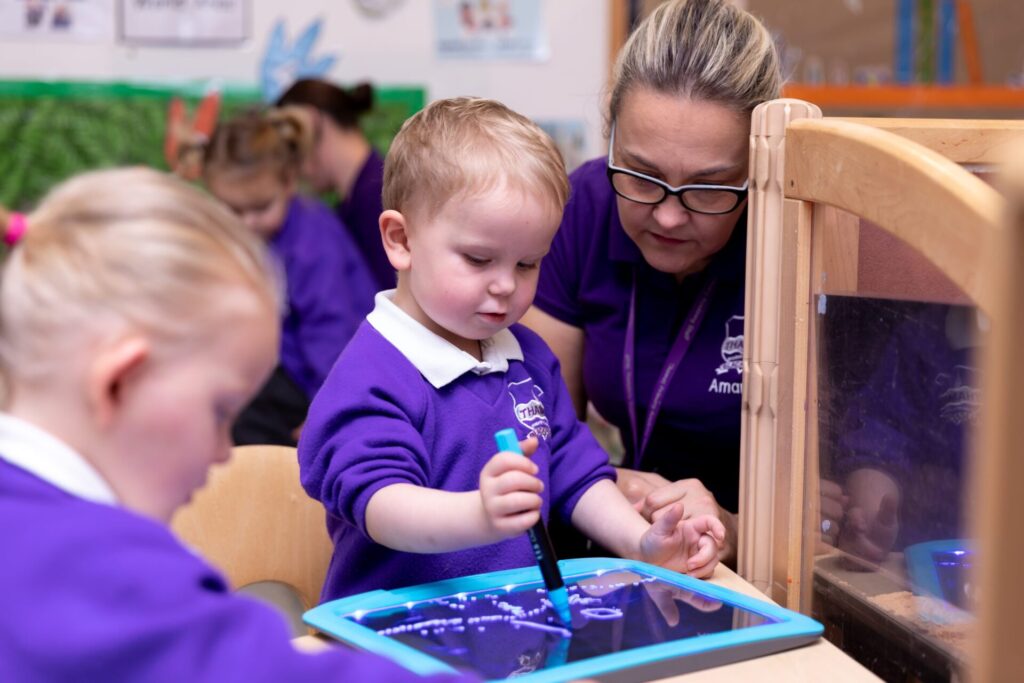
Regularly revisiting previously taught knowledge and concepts supports pupils’ retention of key ideas and knowledge. Our teachers use technology to support them in gaining valuable formative assessment information through retrieval practice and self-quizzing.
We are able to provide training opportunities for colleagues and other schools and will continue to work closely with Google in supporting the use, development and deployment of future technologies for use in supporting teaching and learning. In June 2021, we hosted a digital Roadshow at school which allowed us to showcase and share our practice with our local primary schools and partner schools.